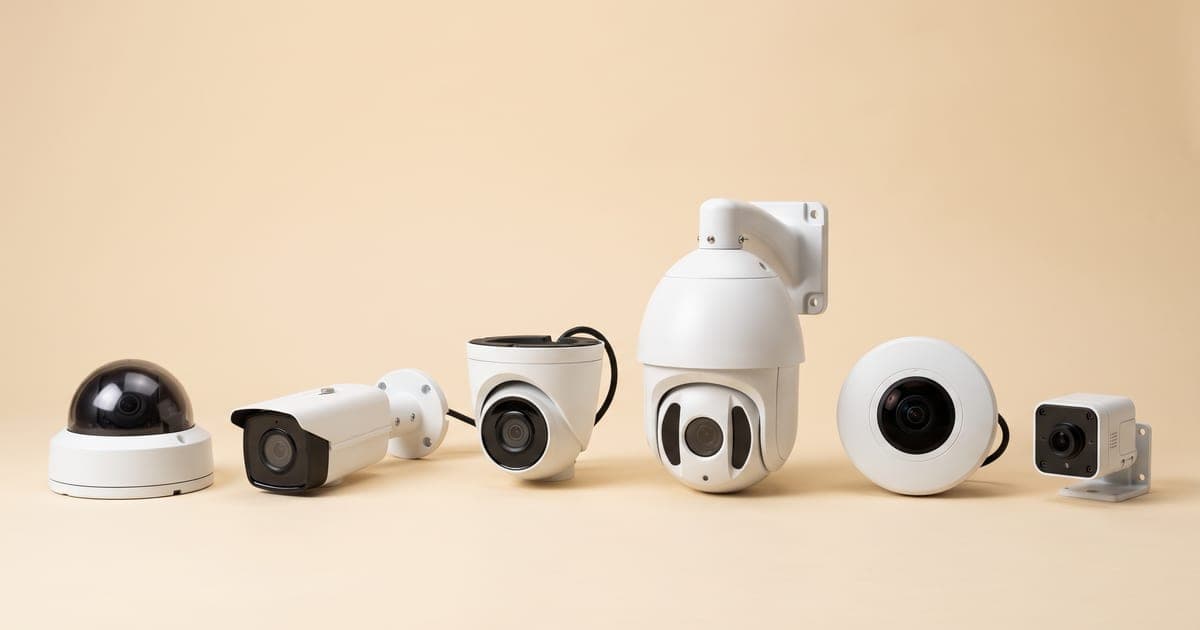

Most "CCTV for shops" guides stop at "buy a few cameras and point them at the door." This one goes further: it shows you exactly where each camera goes by shop size, gives a placement playbook for your specific type of store — jewellery, pharmacy, supermarket, mobile or textile — and explains the 2026 STQC rule every Chennai shop owner now has to follow before buying. With 500+ installations across Chennai, WAEI Enterprise designs retail systems that actually stop losses, not just record them.
Securing a shop or store? Book a free site survey — we'll map your counter, entrance, aisles and stockroom and give a transparent, itemized quote.
Table of Contents
- The Three Real Losses CCTV Prevents
- 2026: STQC-Certified CCTV Is Now Mandatory
- How Many Cameras Does Your Shop Need?
- Camera Placement Map — Where Each One Goes
- Placement Playbook by Shop Type
- IP vs Analog for Shops
- Storage & Footage Retention
- Stop Employee Theft at the Counter
- How to Choose an Installer in Chennai
- FAQ
The Three Real Losses CCTV Prevents
Retail loss isn't just shoplifting. A shop loses money three ways, and good CCTV addresses all three:
- Customer theft (shoplifting) — visible cameras are a proven deterrent at entrances and aisles.
- Employee/internal theft — the quieter, costlier problem: cash skimming, "sweethearting" (not scanning a friend's items), and stock walking out the back. This happens at the counter and stockroom, which is why placement matters.
- Disputes & false claims — "I paid and didn't get change," "the product was already damaged," slip-and-fall claims. Footage settles these instantly.
On top of that, footage is evidence for an FIR and insurance claims, and the system gives you remote peace of mind. The goal isn't cameras everywhere — it's the right cameras where money and stock move.
2026: STQC-Certified CCTV Is Now Mandatory
Before you buy anything, know this: since 1 April 2026, every new internet-connected CCTV camera sold in India must be STQC-certified under MeitY's rules (cybersecurity Essential Requirements, IS 13252 Part 1). Non-certified cameras can't legally be sold or newly installed — and for a shop owner that matters because:
- A cheap, non-compliant camera is now a legal and support risk, not a bargain.
- Several popular imported brands are not currently certified for new sales.
- Your existing shop cameras keep working — the rule only affects new purchases.
How to confirm before you buy: ask the installer for the exact model's STQC certificate and check it on the official STQC portal. Our STQC certification guide explains the check, and the best certified brands for 2026 lists what's safe to buy.
How Many Cameras Does Your Shop Need?
A rough planning rule: one camera covers about 200–300 sq ft of usable area, plus dedicated cameras for the counter and entrance. By shop size:
| Shop type / size | Cameras | Recorder | Storage (retention)* |
|---|---|---|---|
| Kirana / small shop (≤500 sq ft) | 2–4 | 4-ch DVR/NVR | 1 TB (~15–30 days) |
| Medium shop (500–1,500 sq ft) | 4–8 | 8-ch DVR/NVR | 2 TB (~30 days) |
| Supermarket / showroom (1,500+) | 8–16 | 16-ch NVR | 4 TB+ (~30 days) |
| Large multi-floor store | 16–32+ | 32-ch NVR | 6 TB+ (~30 days) |
* Indicative. Final count depends on layout, blind spots and floor count. See the Chennai CCTV cost guide for pricing by setup.
Camera Placement Map — Where Each One Goes
This is where most guides fall short. Here is the actual "camera map" for a typical shop, in priority order:
- Billing / cash counter (non-negotiable) — a dedicated camera facing the counter, angled to see the cash drawer, the customer's hands and the product. This single position protects against both disputes and employee skimming.
- Main entrance/exit — a high-resolution camera capturing every face entering and leaving. Mount it to catch faces, not the tops of heads.
- Aisles / display areas — wide-angle coverage so no shelf is a blind spot; angle down the length of aisles.
- High-value display — a tight, higher-resolution camera on jewellery cases, electronics or premium stock.
- Stockroom / back door — where inventory and internal theft happen; cover the door and shelves.
- Exterior / shutter — a weatherproof (IP66) camera for after-hours break-in attempts.
The rule of thumb: the counter and entrance are mandatory; everything else follows the value and flow of stock.
Placement Playbook by Shop Type
Different retail formats have different risk points. Tune the placement:
Jewellery shops & showrooms
The highest-stakes retail. High-resolution cameras on every display case and the billing counter, a camera covering the strong room / vault door, and a customer-facing camera at the counter. Pair with access control on the strong room. T. Nagar jewellers especially benefit — see our T. Nagar CCTV services.
Pharmacy / medical store
Cover the billing counter and the schedule-drug / prescription counter for accountability, plus the entrance and stockroom. Clear counter footage also helps with billing and returns disputes.
Supermarket & grocery
Cover aisle end-caps (common shoplifting spots), self-checkout, the billing lanes, and the loading/back entrance. Wide aisle coverage plus tight billing-lane cameras.
Mobile & electronics shop
Tight coverage of the demo counter and high-value display rack where small, expensive items change hands, plus the billing point and entrance.
Textile / clothing shop
Cover the trial-room perimeter (never inside), billing counter and exit. Trial rooms are a known shoplifting blind spot — cover the entrance to them, not the interior, for privacy compliance.
IP vs Analog for Shops
| Factor | Analog (HD) + DVR | IP + NVR |
|---|---|---|
| Image quality | Good (up to 5MP) | Excellent (up to 4K) |
| Cabling | Coax + power | Single network cable (PoE) |
| Cost | Lower upfront | Higher, better long-term |
| Mobile/app | Yes | Yes, richer features |
| Smart AI alerts | Limited | Strong (line-cross, etc.) |
| Best for | Budget small shops | Showrooms, multi-camera |
For a small shop on a budget, analog HD is perfectly adequate; for showrooms and high-detail counters, IP CCTV earns its cost. Full comparison in our IP vs analog guide.
Storage & Footage Retention
Keep 15–30 days of footage — long enough to review a dispute or theft reported days later, and the norm insurers and police expect. Two rules that save money and headaches:
- Use a surveillance-rated (24×7) hard disk, not a desktop PC drive — PC drives often fail within 6–12 months in a DVR.
- Size storage to your camera count, resolution and retention; H.265 compression roughly halves the space needed.
Stop Employee Theft at the Counter
Internal theft is the loss owners notice last. The fix is specific placement plus process:
- A dedicated counter camera that sees the cash drawer, the scan/POS screen and the customer's hands.
- Position it so you can match a transaction to what physically happened — this catches "sweethearting" and un-rung sales.
- Add biometric access control on cash rooms and back stores so only authorised staff enter, with an entry log.
You don't need to watch live — you review when the till doesn't tally, and the footage tells the story.
How to Choose a CCTV Installer in Chennai
A box-seller hands you cameras; a professional installer protects your shop. Before you sign, check:
- They install STQC-certified equipment and can show the certificate.
- A written warranty and AMC — ours includes 1 year of free AMC.
- Clean wiring and proper mounting heights, not dangling cables.
- They configure secure mobile access and explain it — see how to view CCTV on mobile.
- A clear answer on who owns the recordings (you do) and a free site survey before quoting.
Frequently Asked Questions
How many CCTV cameras do I need for a small shop in Chennai?
A small shop or kirana store (up to ~500 sq ft) usually needs 2–4 cameras — one on the billing counter, one at the entrance, and one or two covering aisles and the stockroom. Larger shops scale to 8–16+.
What is the cost of CCTV installation for a shop in Chennai?
It depends on camera count, type and storage. A basic small-shop setup starts low, while showrooms cost more. See our Chennai CCTV cost guide for a full breakdown by setup, and always get an itemized quote rather than a single lump sum.
Is STQC certification mandatory for shop CCTV cameras in 2026?
Yes — from 1 April 2026, only STQC-certified internet-connected cameras can be newly sold or installed in India. Ask your installer for the model's certificate. Cameras you already use are unaffected.
IP or analog camera — which is better for a retail shop?
Analog HD is a cost-effective choice for small shops; IP cameras give sharper footage and smart features that suit showrooms, jewellery counters and multi-camera stores. Many shops use a hybrid.
Can I watch my shop's CCTV live on my mobile?
Yes. We configure secure mobile access on every installation, so you can view live and recorded footage from anywhere — ideal for owners running more than one outlet.
Where should I place the camera over the billing counter?
Angle a dedicated counter camera to see the cash drawer, the POS/scan screen and the customer's hands at the same time. This single position protects against billing disputes and employee skimming.
How many days of footage should a retail shop keep?
Keep 15–30 days. That's long enough to review incidents reported later and matches what insurers and police typically expect for claims and FIRs.
Conclusion
The shops that actually cut losses don't just buy cameras — they put the right camera in the right place for their format, keep enough footage, and buy STQC-certified gear from an installer who stands behind it. Cover the counter and entrance first, tune placement to your retail type, and pair cameras with access control where cash and high-value stock sit.
Ready to secure your store? Book a free site survey — WAEI Enterprise designs retail systems with transparent pricing, STQC-compliant equipment and 1 year of free AMC.
Tags
- CCTV for Shops Chennai
- Retail Store Security
- Shop CCTV Installation
- Billing Counter CCTV
- Jewellery Shop CCTV