
Face recognition attendance has become the default choice for Indian workplaces that want accurate, contactless, proxy-proof staff tracking. An employee simply walks up to a terminal, is recognised in under a second, and their in/out time is logged — no card to carry, no sensor to touch, no register to sign, and no way to punch in for an absent colleague. This guide explains how it works, how it kills proxy attendance, the device-vs-app choice most buyers don't know they have, and how to keep it compliant and connected to payroll for a Chennai business.
Note this is the attendance angle — using face recognition to track workforce hours. If your priority is controlling who opens which door, see our companion face recognition access control buyer's guide; the same terminal often does both. To have one installed and connected to payroll, see our biometric attendance system in Chennai.
Quick take: A face recognition attendance system gives fast, hygienic, contactless check-in that all but eliminates buddy-punching and flows straight into payroll. The specs that matter are genuine liveness detection (so a photo can't clock someone in), IR cameras for Chennai's lighting, and a confirmed payroll integration. You'll also choose between a wall-mounted device and a phone-app approach — each fits a different kind of workforce.
How Face Recognition Attendance Works
The system enrols each employee once, converting their face into an encrypted mathematical template (not a stored photo). On each check-in, the camera captures the live face, converts it to a template, and matches it against the database in under a second — logging the time, identity, and in/out direction. That record then flows to attendance and payroll software.
The whole cycle is contactless and walk-up fast, which is why queues that form at fingerprint sensors or punch machines simply disappear at shift change and the morning rush.
Why It Kills Proxy Attendance
Buddy-punching — one employee marking an absent colleague present — is the single biggest source of payroll leakage in manual and card systems. A face cannot be lent out like a card or a PIN, so proxy attendance becomes extremely difficult. Combined with accurate timestamps, this is where the system pays for itself: businesses routinely see attendance fraud and payroll disputes drop sharply after switching.
The critical quality safeguard is liveness detection. Without it, a cheap terminal can be fooled by holding up a printed photo or a phone screen — which would reintroduce the very proxy problem you're trying to solve. Genuine liveness (3D depth, infrared, or motion analysis) confirms a real, living person is present and rejects flat images. Never buy a face attendance system without certified liveness — demand a live photo-rejection demo.
Device vs App: The Choice Buyers Miss
There are two ways to deploy face attendance, and vendors rarely explain both:
- Wall-mounted terminal — a fixed device at the entrance with IR cameras and liveness, ideal for a single office, factory, or campus with a defined entry point. Most robust, best throughput, doubles as door access.
- Phone-app (selfie) attendance — employees check in from a mobile app using the phone camera, often with GPS geo-fencing. Best for field staff, sales teams, and distributed or work-from-anywhere workforces where there's no single gate.
Many Chennai businesses use both: a terminal at the office, the app for field staff — all feeding one attendance dashboard. The right choice depends on where your people actually are when they start work.
Accuracy in Real Chennai Conditions
Quality terminals with dual IR cameras recognise faces reliably in low light, harsh afternoon glare, and with partial cap or mask coverage — important for Chennai's bright, humid environment and varied indoor lighting. Recognition stays accurate even at a short distance, so employees needn't stop and pose. Accuracy degrades only with poor enrolment or bad camera placement (directly into glare), which is exactly why professional installation matters as much as the device. For how face stacks up against fingerprint, RFID, and cards for attendance, see our fingerprint vs face vs RFID vs card comparison.
Payroll & HRMS Integration
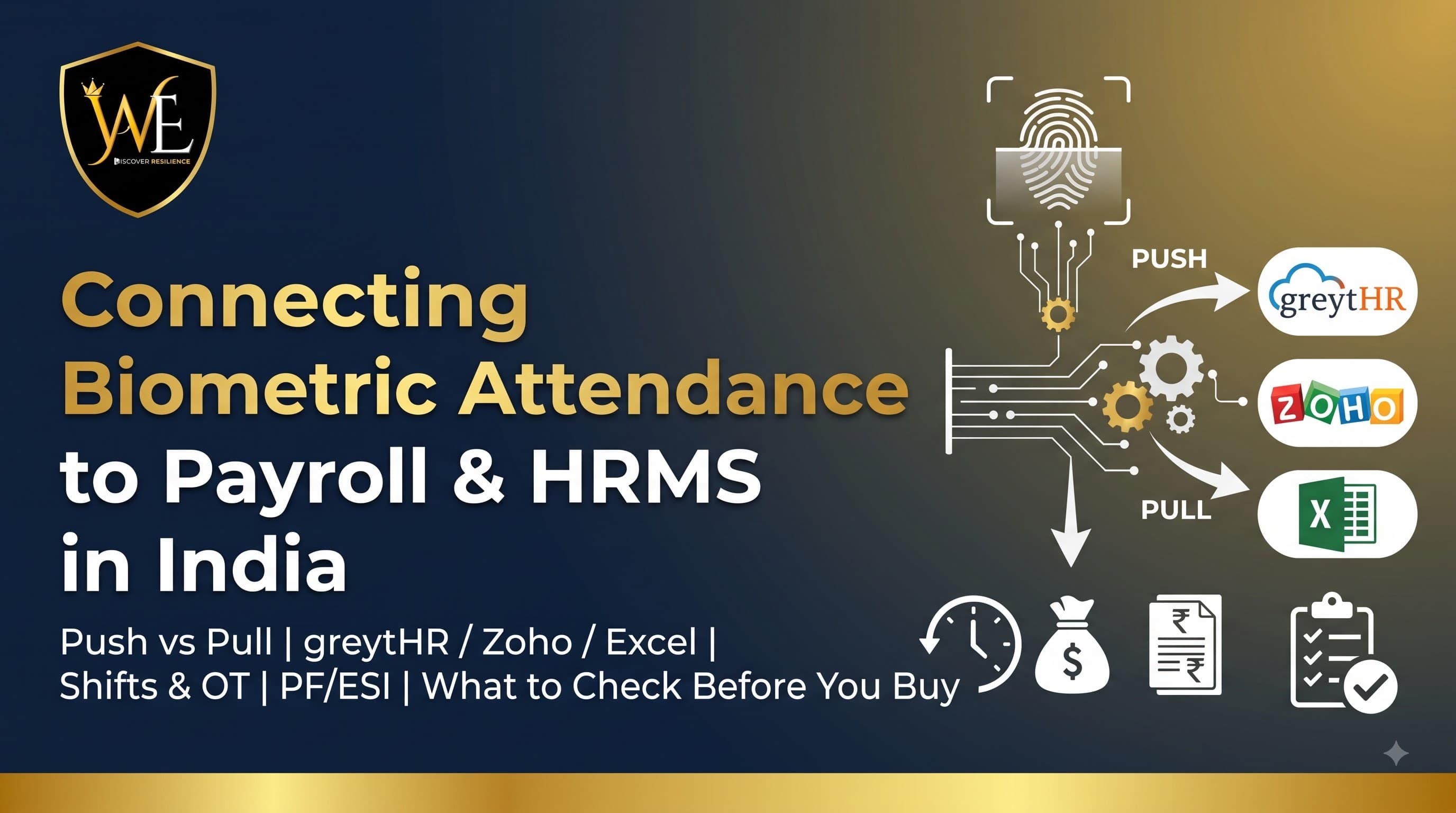
The real payoff is automation: verified check-ins export to your payroll or HRMS (greytHR, Zoho, SalaryBox, or an Excel format), so hours, overtime, and statutory deductions calculate on tamper-proof data instead of a manual register. Confirm the integration path before you buy — our guide to connecting biometric attendance to payroll and HRMS covers push vs pull and exactly what to check. Beyond payroll, the system gives real-time workforce analytics: late-ins, absentees, and overtime visible to managers instantly.
Data Privacy: DPDP Compliance
A face template is personal data under India's DPDP Act. Store encrypted templates locally (not raw images), use the data only for attendance and payroll, secure it, and delete an employee's template when they leave. Attendance qualifies as an employment "legitimate use," so a compliant rollout is straightforward — the full picture is in our guide to whether biometric attendance is legal in India under the DPDP Act. We configure systems for local encrypted storage by default, and for staff who prefer not to enrol a face, a card credential is the fallback.
Frequently Asked Questions
How does a face recognition attendance system work?
It enrols each employee's face once as an encrypted template, then on each check-in the camera matches the live face against the database in under a second and logs the time and identity. The record flows automatically to attendance and payroll software. The whole process is contactless and walk-up fast, eliminating registers and queues.
Can a face recognition attendance system be fooled by a photo?
Only if it lacks liveness detection, which is why you should never buy one without it. Genuine liveness uses 3D depth, infrared, or motion analysis to confirm a real living person is present and rejects printed photos and phone screens — which is essential, because without it the system could be defeated by the very proxy attendance it's meant to stop.
Does face recognition attendance stop proxy or buddy punching?
Yes, almost entirely. A face cannot be shared or handed over like a card or PIN, so one employee cannot clock in for an absent colleague. Combined with accurate timestamps and liveness detection, businesses typically see attendance fraud and payroll disputes fall sharply after switching.
What is the difference between a face attendance device and an app?
A wall-mounted device is a fixed terminal at the entrance, best for offices, factories, or campuses with a defined entry point. A phone-app approach lets employees check in via a mobile selfie with GPS geo-fencing, best for field staff and distributed teams. Many businesses use both, feeding one dashboard.
Can it integrate with payroll software?
Yes. Verified check-ins export to payroll or HRMS platforms such as greytHR, Zoho, and SalaryBox, or a clean Excel/CSV file, so hours and overtime calculate automatically. Always confirm the specific integration path with your software before buying.
Is face recognition attendance legal and DPDP compliant in India?
Yes. Attendance qualifies as an employment legitimate-use under the DPDP Act, so it's legal provided you store encrypted templates securely, use them only for attendance and payroll, and delete them when an employee leaves. Staff who prefer not to enrol a face can use a card instead.
Conclusion
A face recognition attendance system delivers what Indian workplaces actually want: fast, hygienic, contactless check-in that eliminates proxy attendance and flows straight into payroll. Get the essentials right — genuine liveness detection, IR cameras, the correct device-or-app fit for your workforce, a confirmed payroll integration, and DPDP-compliant storage — and it turns attendance from a monthly headache into an automated, trustworthy record.
At WAEI Enterprise, we design and install face recognition attendance and access control systems across Chennai — terminal, app, or both — integrated with your payroll and backed by 1 year of free AMC. Book a free site survey and we'll recommend the right setup for your workforce.
Last updated: September 2026. Specifications subject to change.
Tags
- Face Recognition Attendance System
- Contactless Attendance
- Biometric Attendance System Chennai
- Face Attendance Machine
- Time Attendance System
- Access Control Systems Chennai