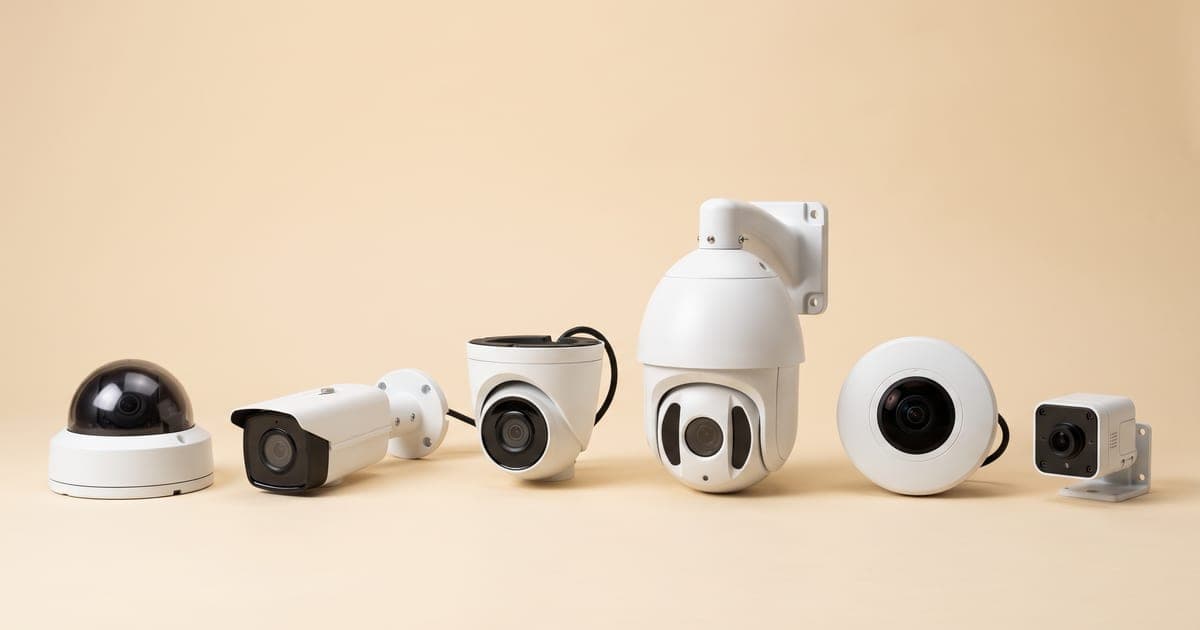

Buy too few CCTV cameras and you leave blind spots exactly where you needed to see; buy too many and you've overspent on overlapping views. The right number comes down to your entry points and the areas you genuinely need covered — not a round figure a salesperson picks for you.
This guide gives you a realistic camera count for homes, apartments, shops and offices in India, plus the placement priorities that decide it. With 500+ installations across Chennai and 5,000+ cameras deployed, WAEI Enterprise sizes coverage to the property, not to the invoice.
Want an exact camera plan for your property? Book a free site survey — we'll map entry points and recommend a count with a transparent quote.
Table of Contents
- The rule that decides your count
- How many cameras for a home
- How many for an apartment / flat
- How many for a shop
- How many for an office
- Placement priorities (in order)
- Don't forget storage and recorder channels
- Frequently Asked Questions
The rule that decides your count
Start by counting entry points (gates, doors, shutters) and high-value zones (car park, till, storeroom). Every entry point should have a camera; every high-value zone should have one. That total, plus one wide "overview" camera, is your starting number — before adjusting for budget and blind spots.
How many cameras for a home
Independent house — typically 4 cameras:
- Main gate / compound entrance
- Front door
- Backyard or rear access
- Car park / driveway
Larger homes with side access or multiple floors often go to 6–8. For most Chennai homes, 4 well-placed cameras cover the property properly.
How many for an apartment / flat
1–2 cameras is usually enough:
- One at the main door (the key entry point)
- Optionally one covering the hall or balcony
A WiFi camera is ideal here — no cabling, phone viewing, quick install. For gated-community common areas, see CCTV for apartments & housing societies.
How many for a shop
Typically 4 cameras:
- Entrance / shutter
- Billing counter / till (the most important view)
- Storeroom or stock area
- Exterior / footpath
Retail with more aisles or a larger floor scales to 6–8. More detail in CCTV for shops & retail stores.
How many for an office
Usually 8+ cameras:
- Main entrance and reception
- Each exit and stairwell
- Server / store room
- Open work areas and cabins as needed
- Parking
Offices normally pair this with an access control system for door entry. Continuous recording matters here — size storage accordingly.
Placement priorities (in order)
If budget forces a smaller count, cover in this order:
- Main entry point — the one door everyone uses
- Secondary entrances — back doors, side gates, shutters
- High-value zone — till, safe, stock, car park
- Overview camera — a wide shot of the main area
- Perimeter — boundary walls, approaches
Mount at 8–10 ft, avoid pointing into direct sunlight, and check WiFi signal before fixing a wireless camera.
Don't forget storage and recorder channels
Your camera count sets your recorder size: a 4-camera setup needs a 4-channel DVR/NVR, 8 cameras an 8-channel, and so on — always leave one spare channel for future expansion. Camera count and resolution also decide how many days you can store. See CCTV storage: cloud vs SD vs DVR/NVR to size retention, and the Chennai price list for package costs by camera count.
Get a room-by-room camera plan. Book a free WAEI site survey and we'll recommend the exact number of cameras for your home, shop or office — no upselling.
Frequently Asked Questions
How many CCTV cameras do I need for my home?
Most independent houses need 4 cameras — main gate, front door, backyard, and car park. Apartments usually need just 1–2, focused on the main door. Larger homes with multiple access points may need 6–8.
How many CCTV cameras does a shop need?
A typical shop needs 4 cameras: entrance/shutter, billing counter, storeroom, and exterior. Larger retail floors with multiple aisles scale to 6–8.
How many cameras can one DVR or NVR support?
Recorders come in 4, 8, 16 and 32-channel versions — match the channel count to your cameras and leave one spare for future expansion.
Is it better to have more cameras or higher-resolution cameras?
Cover every entry point first, then raise resolution where identification matters (till, main door). A few well-placed 2K/3MP cameras beat many low-resolution cameras with overlapping views.
Where should I place cameras if I can only afford a few?
Prioritise the main entry point first, then secondary entrances, then your highest-value zone (till, safe, car park), and finally a wide overview shot.
Tags
- How Many CCTV Cameras
- CCTV Coverage
- CCTV Camera Placement
- CCTV for Home
- CCTV for Shop
- CCTV Installation Chennai