
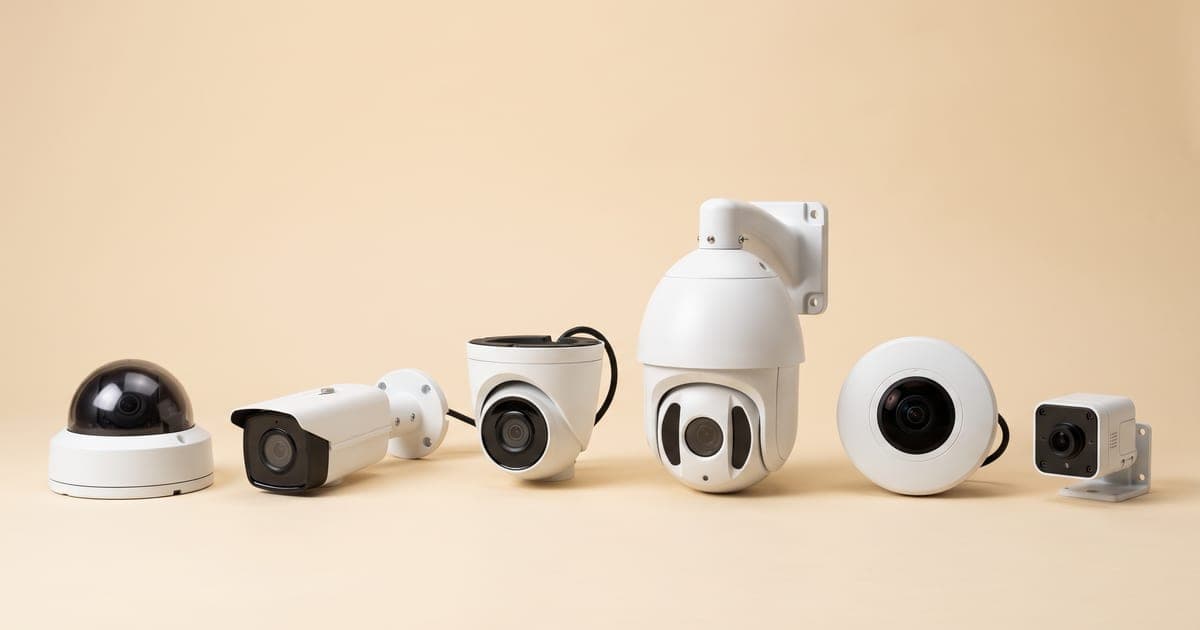
Walk into any CCTV shop in Chennai and you will hear a dozen names — dome, bullet, turret, PTZ, fisheye, IP, HD, WiFi, 4G, solar. They sound like a dozen competing products, but they are not. They answer three different questions, and once you separate them, choosing the right camera takes a few minutes instead of a few weeks.
- What shape is the camera? — dome, bullet, turret, PTZ, box, fisheye, panoramic, pinhole
- How does the video travel? — analog HD, IP, WiFi, 4G SIM, solar-powered
- What special job does it do? — colour night vision, number-plate reading, thermal, dual-lens, AI detection
Every camera you buy is one answer from each list. A "4MP IP turret with colour night vision" is simply turret (shape) + IP (connection) + colour night vision (feature). This guide explains every type in plain language, with pictures, and ends with the combination we actually recommend for homes, shops, apartments and offices — based on 500+ installations across Chennai.
Short on time? Jump to which type is best for your property, or book a free site survey and an engineer will choose for you.
Table of Contents
- How many types of CCTV cameras are there?
- All CCTV camera types at a glance
- Types by shape: dome, bullet, turret, PTZ and more
- Types by connection: analog, IP, WiFi, 4G and solar
- Speciality cameras
- Which type is best for your property?
- Mistakes people make when choosing a type
- Frequently Asked Questions
How many types of CCTV cameras are there?
There is no official number, which is why every website gives a different one. The honest answer is: eight body shapes, five ways of connecting, and a handful of speciality features layered on top.
When people ask for "the 4 types of CCTV cameras", they almost always mean the four body shapes that make up the vast majority of real installations: dome, bullet, turret and PTZ. The rest — box, fisheye, panoramic and pinhole — are used for specific jobs.
All CCTV camera types at a glance
| Type | Classified by | Best for | Relative cost |
|---|---|---|---|
| Dome | Shape | Indoors, receptions, shops, lifts | ₹ |
| Bullet | Shape | Gates, compound walls, long driveways | ₹ |
| Turret (eyeball) | Shape | Homes, entrances, all-round use | ₹ |
| PTZ | Shape | Large compounds, parking, factory yards | ₹₹₹ |
| Box | Shape | Special lenses, traffic, industrial | ₹₹ |
| Fisheye (360°) | Shape | Open halls, retail floors, warehouses | ₹₹ |
| Multi-sensor panoramic | Shape | Gates, junctions, wide open areas | ₹₹₹ |
| Pinhole / covert | Shape | Discreet monitoring (lawful areas only) | ₹ |
| Analog HD | Connection | Budget systems, upgrading old wiring | ₹ |
| IP (network) | Connection | New builds, offices, high detail | ₹₹ |
| WiFi | Connection | Homes and small shops with broadband | ₹ |
| 4G SIM | Connection | Sites with no internet line | ₹₹ |
| Solar | Power | Farms, plots, sites with no mains | ₹₹₹ |
Relative cost is a rough guide within each group, not a quote. For real numbers by camera count, see our CCTV installation cost in Chennai price list.
Types of CCTV cameras by shape
The shape decides where a camera can go, how visible it is, and how hard it is to tamper with. It has nothing to do with image quality — a 4MP dome and a 4MP bullet record the same picture.
1. Dome camera
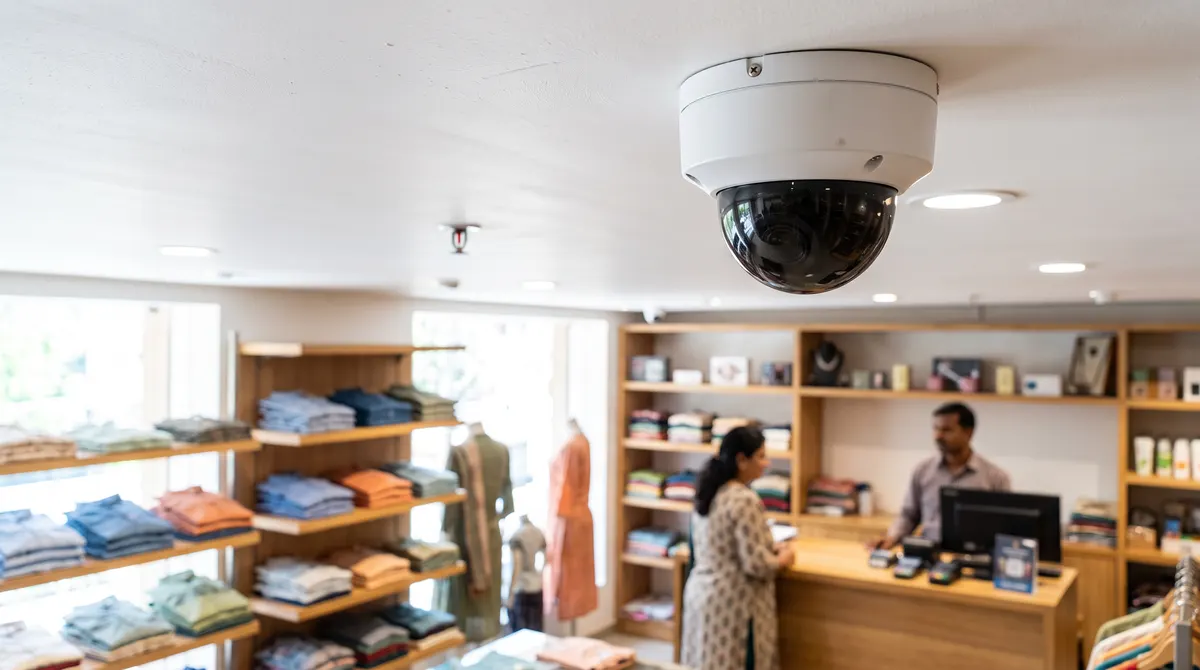
A dome camera sits inside a rounded, usually tinted cover. It is the most common indoor camera in India.
- Why people choose it: it is discreet, and the tinted cover hides the lens direction, so a would-be thief cannot tell whether they are in view. Vandal-rated domes (IK10) survive being hit with a stick.
- Watch out for: at night, the cover can reflect the camera's own infrared light and fog the picture if it is scratched or dusty. Keep it clean.
- Best for: receptions, shop floors, billing counters, corridors, lift cabins and anywhere at ceiling height.
2. Bullet camera
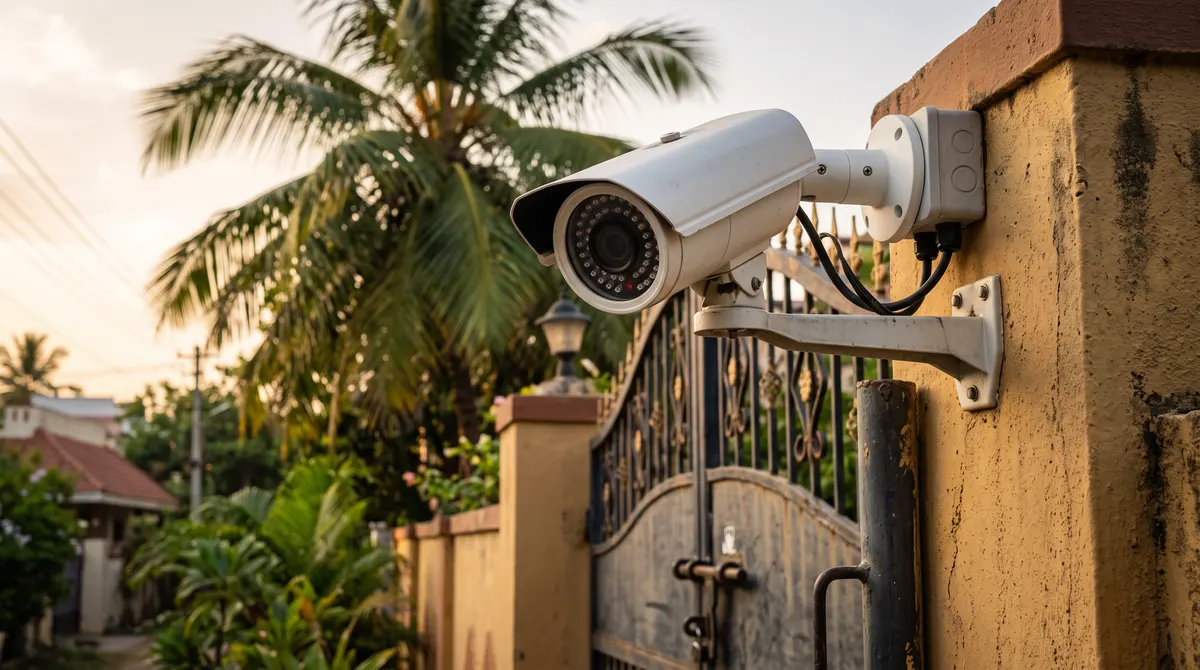
A bullet camera is a long cylinder on a wall bracket. It is the classic outdoor camera.
- Why people choose it: it is visible, which deters people on its own; the long body shades the lens from Chennai sun and rain; and it can carry bigger infrared LEDs and longer lenses than a dome, so it sees further at night.
- Watch out for: because it is visible and within reach on a bracket, it can be knocked or turned. Mount it high.
- Best for: main gates, compound walls, driveways, car parks and factory perimeters.
3. Turret (eyeball) camera
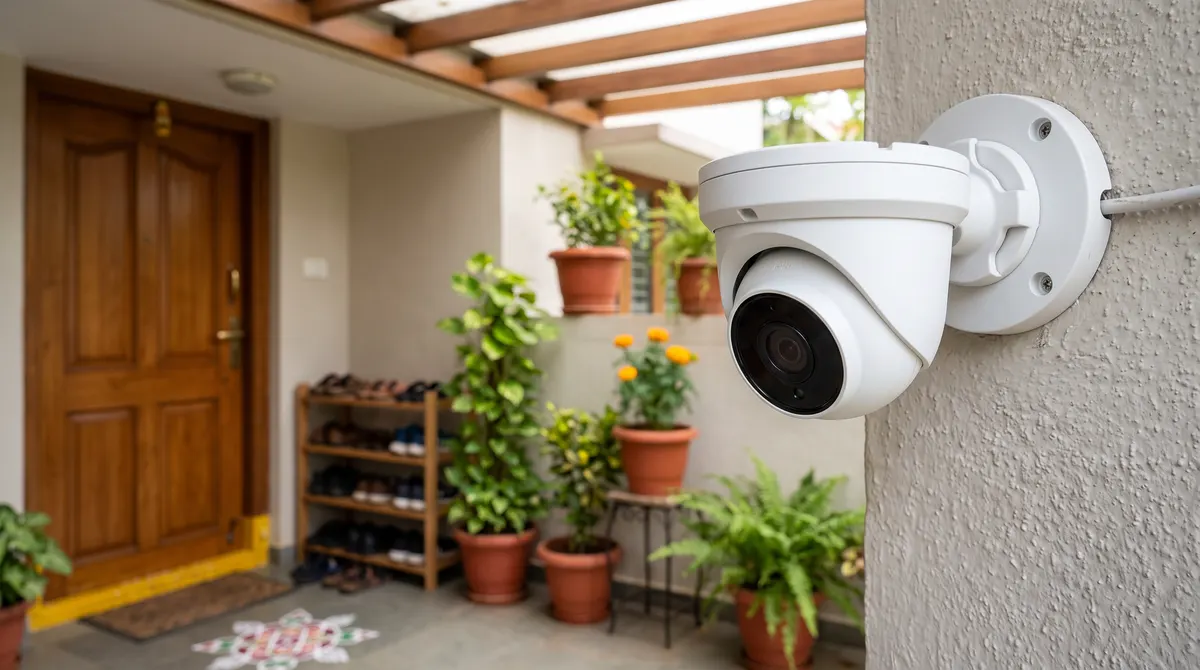
A turret camera looks like a dome without the cover — a ball-shaped camera sitting in a shallow cup. It has quietly become the default home camera over the last few years.
- Why people choose it: there is no cover to reflect infrared, so night footage is cleaner than a dome's; it is easy to re-aim; and it works just as well on a wall as on a ceiling, indoors or out.
- Watch out for: you can see which way it points, and it is less vandal-resistant than a hardened dome.
- Best for: homes, entrances, balconies, porches and small offices — it is the safest "all-round" pick.
4. PTZ camera (pan-tilt-zoom)
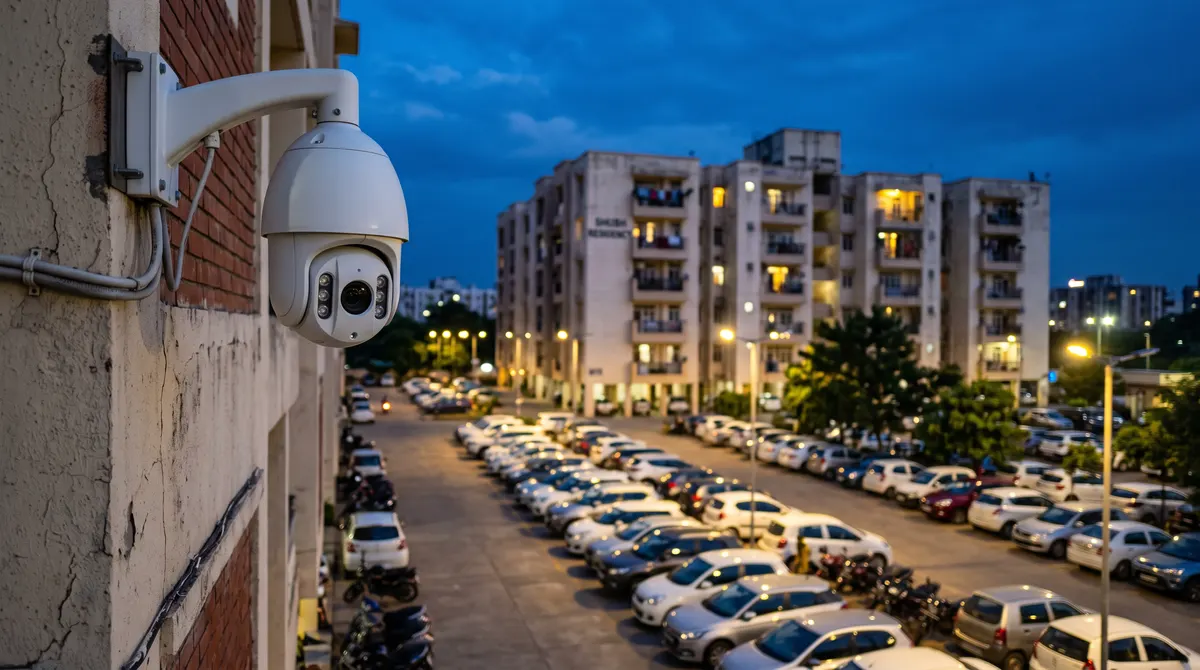
A PTZ camera can pan (turn left and right, usually a full 360°), tilt (up and down) and zoom optically. Better models follow a moving person automatically.
- Why people choose it: one PTZ can watch a large compound and zoom in far enough to read a number plate across a parking lot — something no fixed camera can do.
- Watch out for: it only records where it is pointing. While it zooms in on the gate, the rest of the yard is unwatched. That is why a PTZ should add to fixed cameras, never replace them. It also costs several times more than a fixed camera.
- Best for: large apartment complexes, factory yards, warehouses, schools, campuses and car parks.
5. Box camera
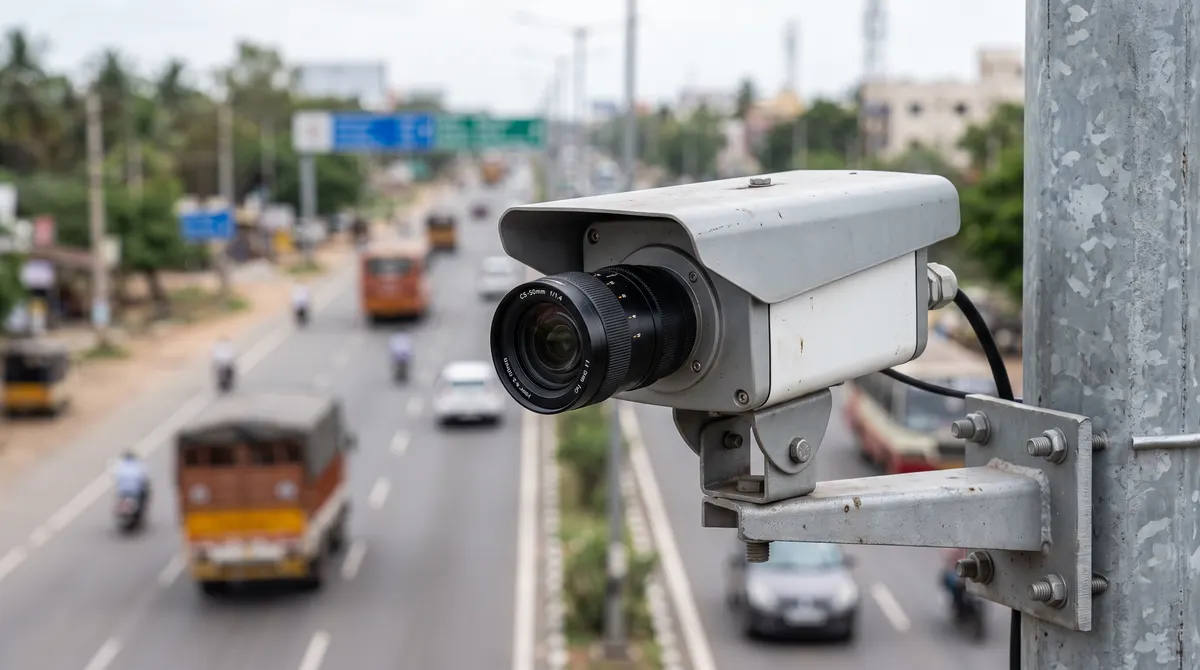
A box camera is a rectangular body with a separate, interchangeable lens, usually fitted inside a protective housing.
- Why people choose it: you can fit a special lens — a very long telephoto, for example — which a sealed dome or bullet cannot take.
- Watch out for: it needs a housing, bracket and lens bought separately, so it is bulkier and pricier to set up.
- Best for: highways, toll plazas, industrial processes and long-distance views. Rarely the right choice for a home or shop.
6. Fisheye (360°) camera
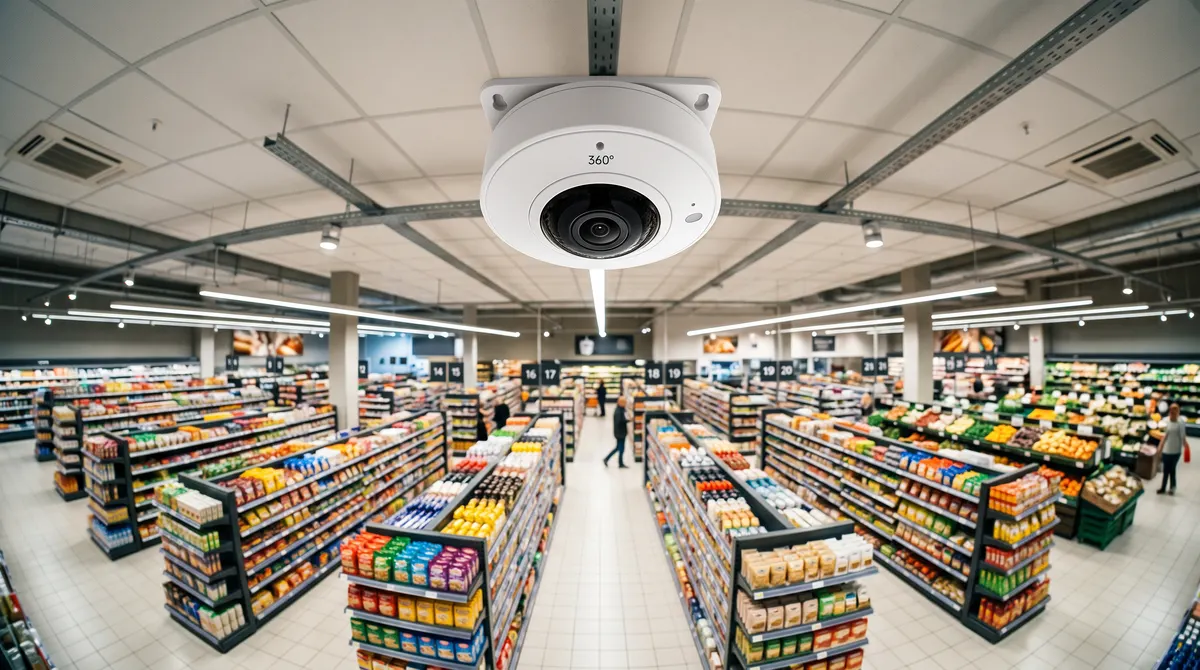
A fisheye camera uses one very wide lens to see an entire room — 180° on a wall, or a full 360° when mounted on the ceiling. The recorder or app "flattens" the round image into normal views.
- Why people choose it: one fisheye on the ceiling of a shop can replace three or four fixed cameras, with no blind corners.
- Watch out for: detail drops sharply towards the edges of the image. It shows you that something happened across the room, but often not who did it.
- Best for: open retail floors, halls, lobbies and warehouse aisles — paired with a sharper camera at the entrance.
7. Multi-sensor panoramic camera
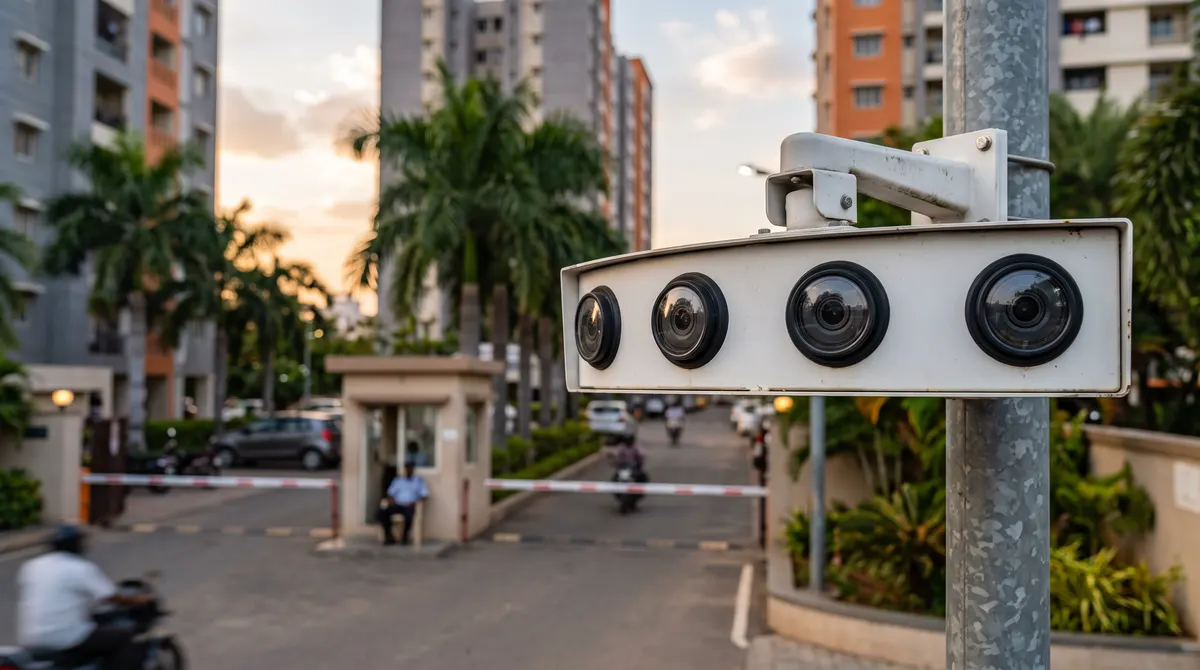
A panoramic camera puts two to four separate lenses in one housing and stitches their images into one wide view, typically 180°.
- Why people choose it: it gives the wide coverage of a fisheye without losing detail at the edges, because each lens has its own sensor.
- Watch out for: it is one of the more expensive camera types, and it needs a recorder that supports it.
- Best for: community gates, road junctions, large parking areas and building corners.
8. Pinhole / covert camera
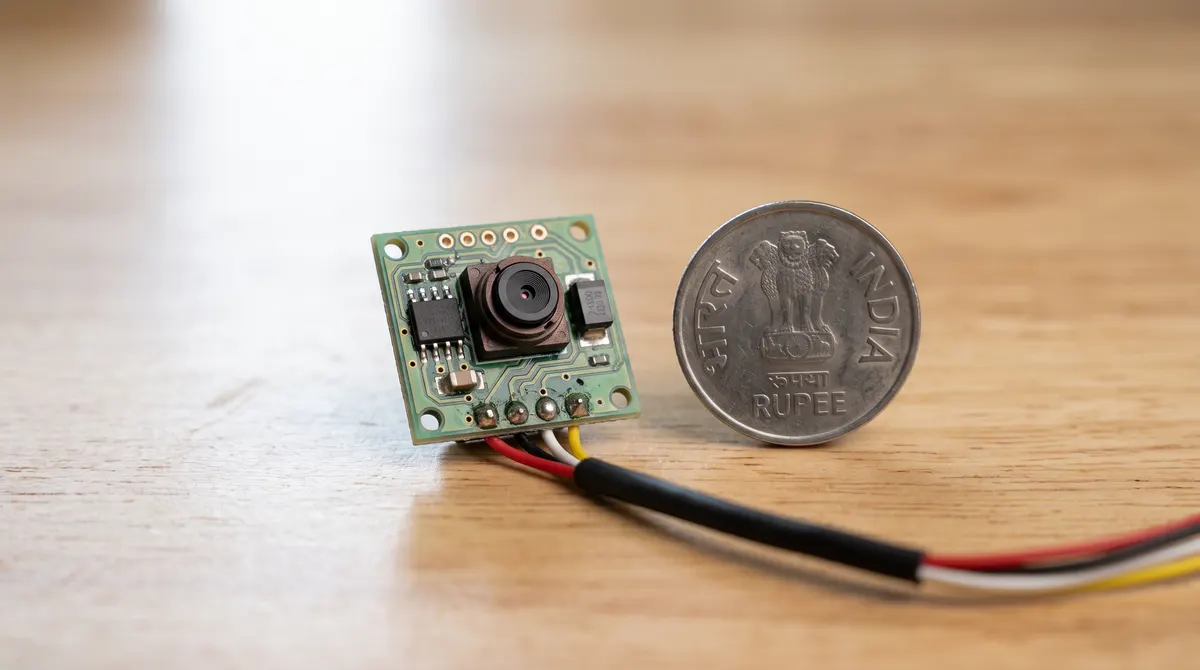
A pinhole camera hides a tiny lens inside an everyday object or behind a small hole in a wall or panel.
- Why people choose it: to watch a cash drawer or storeroom without making the camera obvious.
- Watch out for: the image is small and the lens is limited. More importantly, recording in private spaces — washrooms, changing rooms, bedrooms of staff or tenants — is a criminal offence in India. Use covert cameras only in areas where people have no expectation of privacy, and tell staff that the premises are monitored.
- Best for: very specific, lawful business uses. For almost every home, a visible camera is the better deterrent.
Types of CCTV cameras by connection
This is the choice that actually decides your picture quality, your wiring and most of your budget. The shape can be any of the above; the connection is how the video gets from the camera to the recorder or your phone.
1. Analog HD camera (HD-TVI / AHD / CVI)
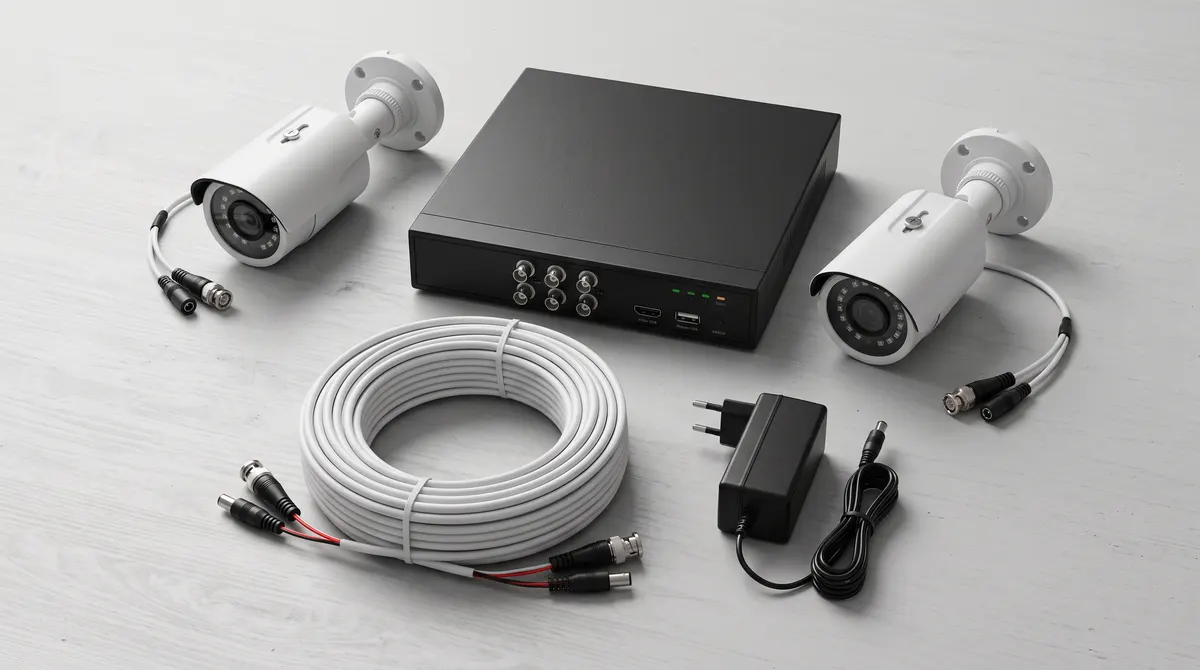
Modern analog cameras send HD video — up to 5MP — over 3+1 cable (a coaxial core plus power) to a DVR (digital video recorder).
- Pros: the lowest cost per camera, simple to maintain, and ideal if the building already has CCTV cabling from an older system.
- Cons: tops out around 5MP, fewer smart features, and each camera needs its own cable run back to the DVR.
- Choose it if: budget matters most, or you are upgrading an old system on its existing wires. See our analog HD CCTV installation page.
2. IP camera (network camera)
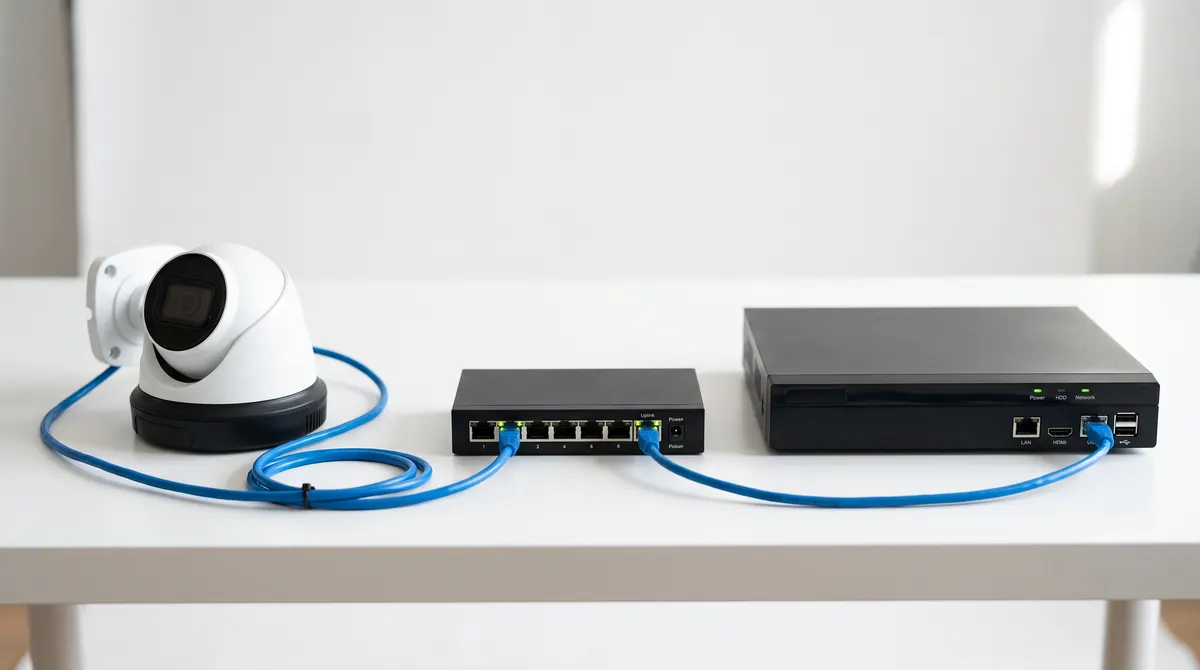
An IP camera sends digital video over a network cable (Cat6) to an NVR (network video recorder). One cable carries both power and data using PoE (Power over Ethernet), up to 100 metres per run.
- Pros: much sharper footage (2MP to 12MP), better night vision, smart detection of people and vehicles, easy expansion, and one cable per camera.
- Cons: costs roughly 30–50% more than an equivalent analog system.
- Choose it if: you are wiring a new home or office, need to identify faces or number plates, or plan to add cameras later. See our IP CCTV installation page, and compare the two in detail in IP camera vs analog camera.
3. WiFi camera

A WiFi camera connects to your home or shop router without a data cable. It usually records to a microSD card inside the camera or to the cloud, and you watch it on a phone app.
- Pros: quick to install, no cable to chisel into walls, and very affordable for one to four cameras.
- Cons: it still needs a power socket nearby, it depends on your WiFi signal reaching it, and a card inside the camera is lost if the camera is stolen.
- Choose it if: you have broadband and want a few cameras in a flat, a house or a small shop. See WiFi camera installation and our WiFi vs wired CCTV comparison.
4. 4G SIM camera
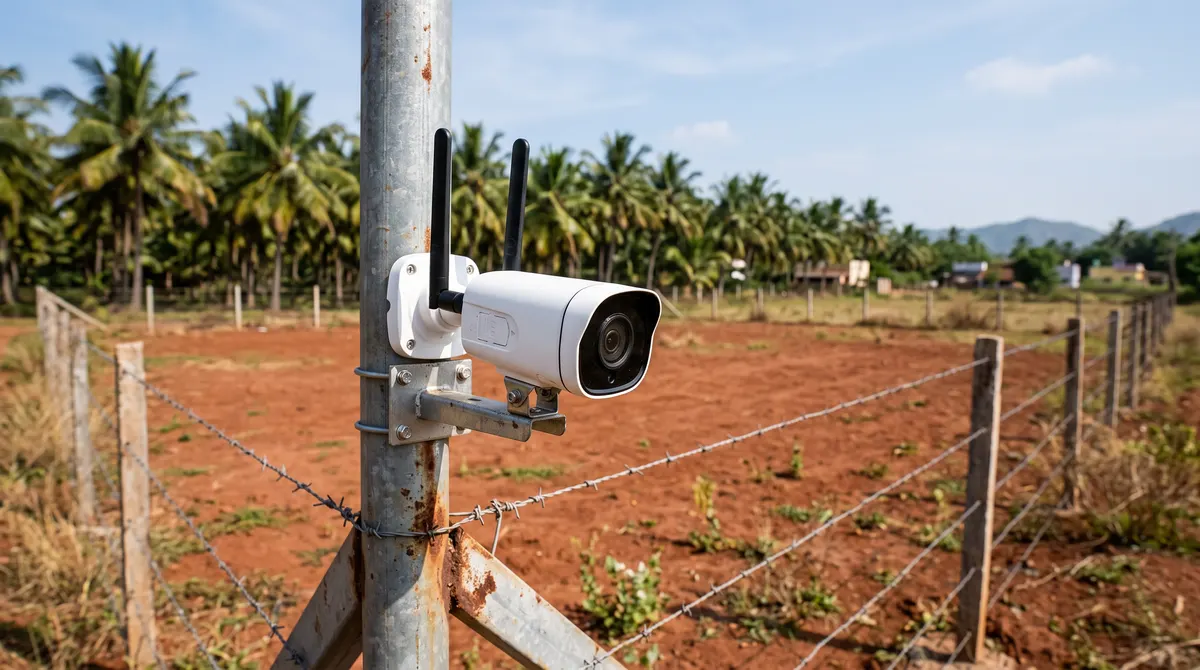
A 4G camera carries a SIM card and sends video over the mobile network, so it needs no broadband at all.
- Pros: works anywhere with mobile coverage — plots, farms, construction sites, godowns, a second home.
- Cons: needs a data plan, and footage quality is limited by the signal where it is mounted.
- Choose it if: there is power on site but no internet line. See 4G SIM CCTV cameras.
5. Solar-powered camera
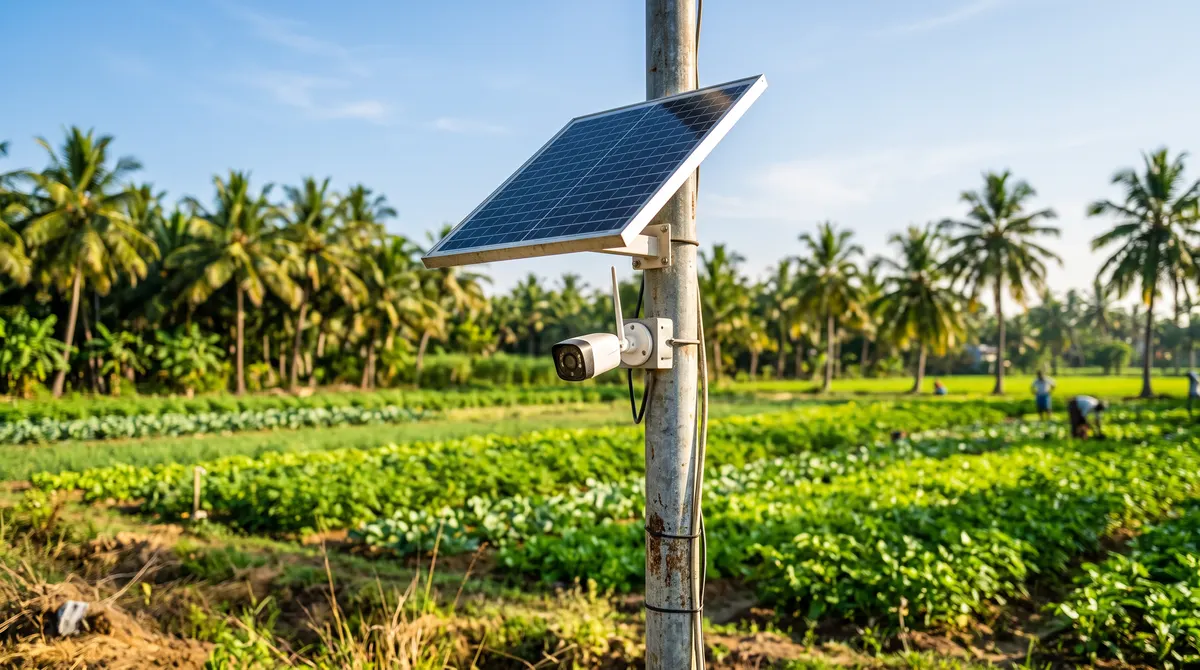
A solar camera runs on its own panel and battery, so it needs no mains power either. It pairs with WiFi (where there is broadband) or with a 4G SIM (where there is not).
- Pros: can be installed on a pole in an open field with no electrical work.
- Cons: the panel and battery must be sized for monsoon weeks with little sun, or the camera goes dark exactly when you need it.
- Choose it if: there is no electricity where the camera needs to be. See solar CCTV cameras.
One rule that applies to every type: from 1 April 2026, CCTV cameras sold in India must be STQC-certified. Whatever type you choose, confirm the exact model is certified — read STQC certification for CCTV explained.
Speciality CCTV cameras
These are features added to a camera of any shape or connection.
Colour night vision (dual-light) camera
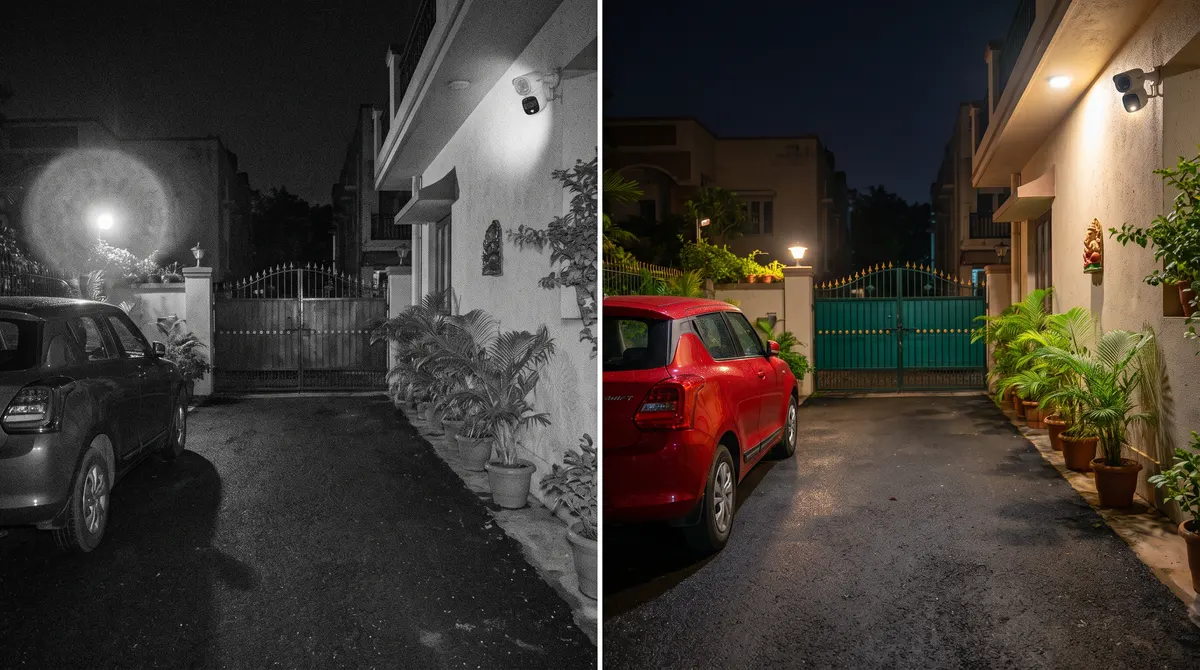
Ordinary cameras switch to black-and-white infrared at night. Colour night vision cameras use a more sensitive sensor, often with a small warm-white light, to keep colour after dark — which matters when you need to report the colour of a vehicle or a shirt. Dual-light models stay on infrared and switch the white light on only when they detect a person.
ANPR / LPR camera (number-plate recognition)
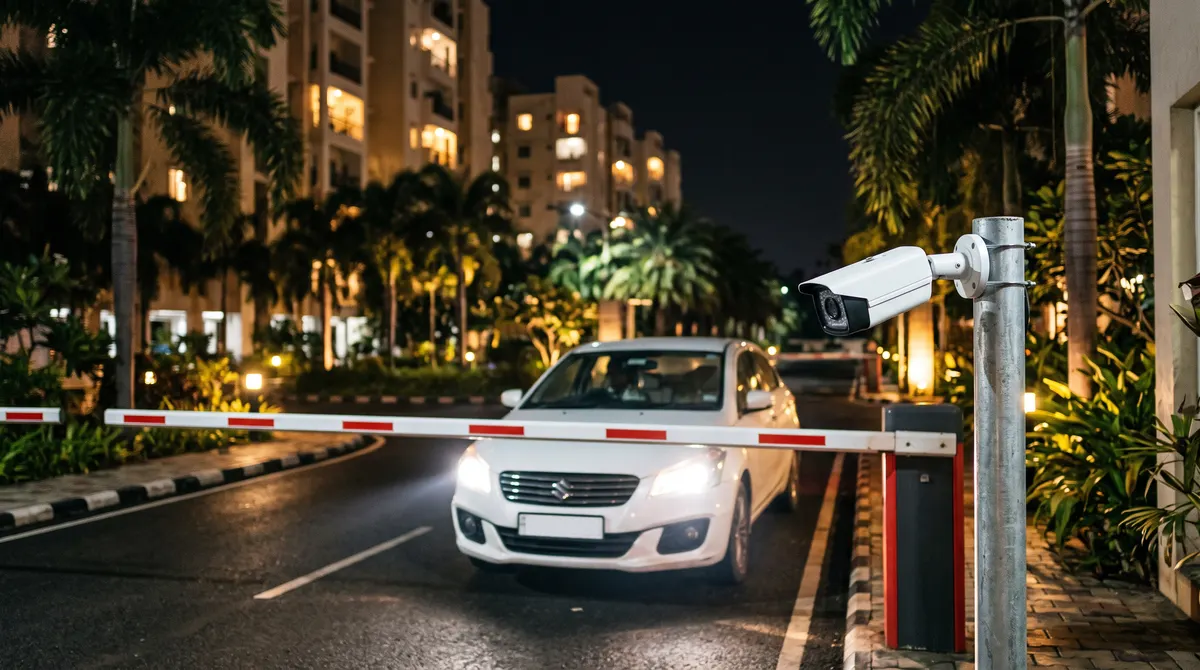
An ANPR (automatic number-plate recognition) camera is tuned to read vehicle registration plates, even at night and through headlight glare, and log them as text. It can open a boom barrier for residents' cars automatically. Used at apartment gates, office car parks, factories and toll points.
Thermal camera
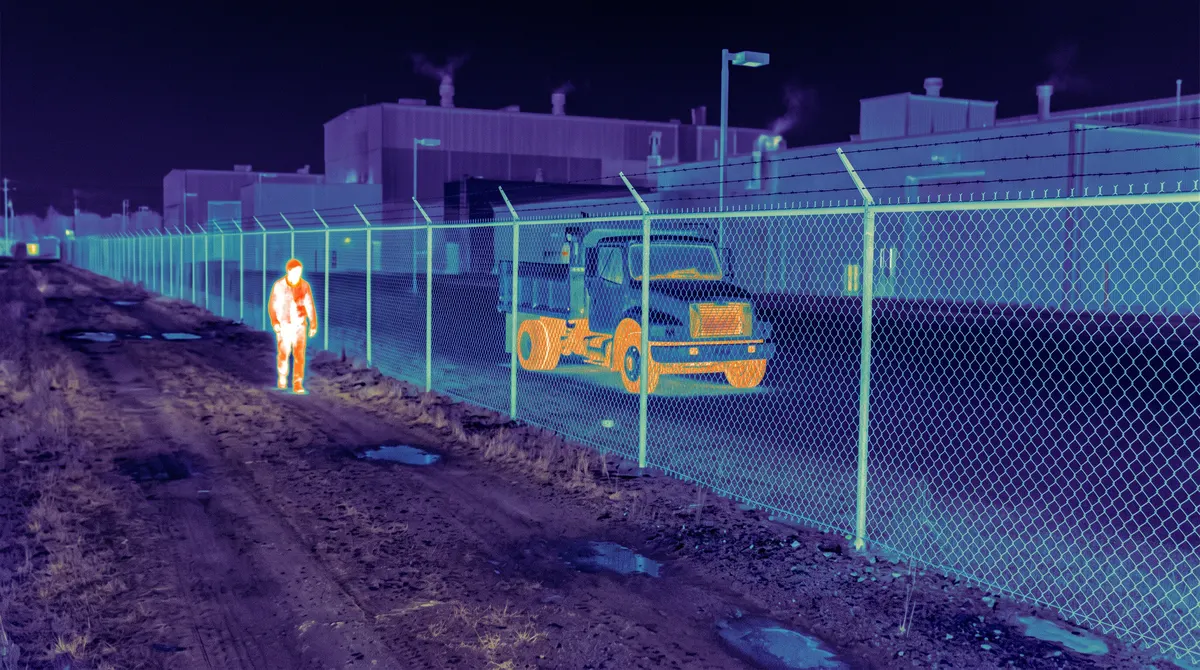
A thermal camera sees heat instead of light, so it detects people and animals in complete darkness, smoke or fog. It cannot identify faces, and it is expensive, so it is used for perimeters of factories, farms and critical sites rather than homes.
Dual-lens camera
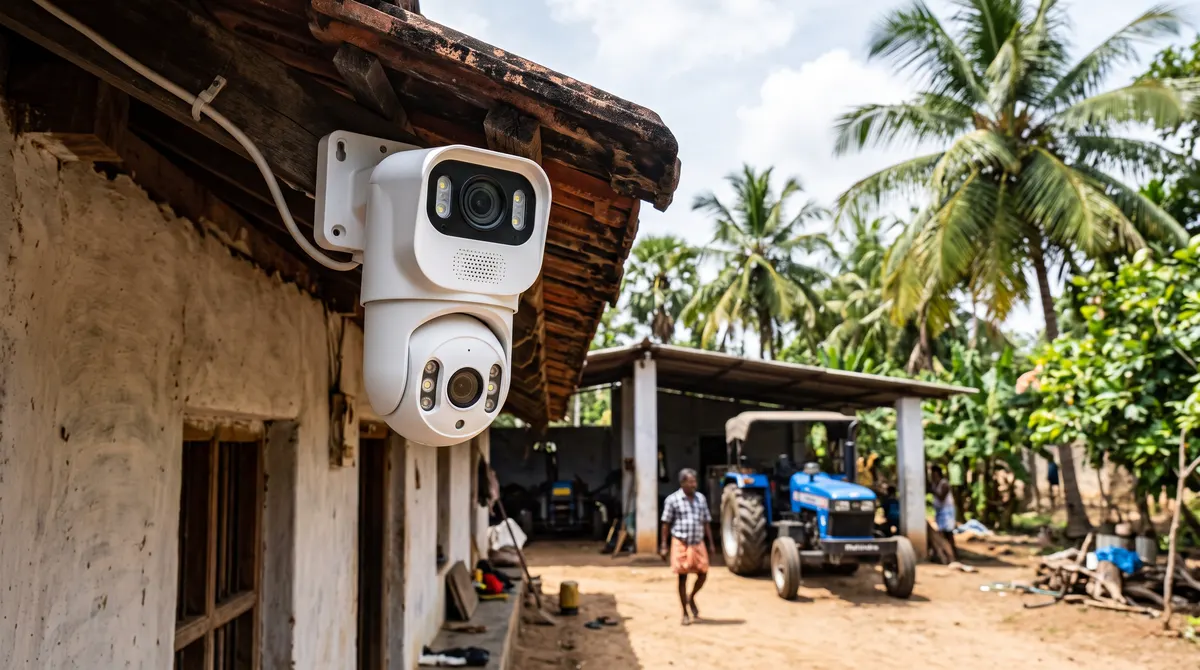
A dual-lens camera puts two lenses in one body — typically one wide view and one zoomed or pan-tilt view — so you see the whole area and a close-up at the same time. Very common in WiFi and 4G cameras for homes and farms.
AI camera (smart detection)
An AI camera recognises people and vehicles instead of reacting to any movement, so it stops sending alerts every time a tree moves or a cat walks past. Higher-end models add line-crossing, intrusion zones and face detection. For the wider trend, see AI CCTV trends for Chennai businesses.
Which type of CCTV camera is best for your property?
This is where the three choices come together. These are the combinations we install most often in Chennai.
| Property | Shape | Connection | Why |
|---|---|---|---|
| Flat / apartment unit | Turret or dome | WiFi, or IP if wiring is new | Door and living area; phone viewing matters most |
| Independent house / villa | Turrets + one bullet at the gate | IP (or analog HD on old wiring) | Clean night footage; bullet reaches down the drive |
| Shop / showroom | Domes inside, turret at entrance, fisheye on the floor | IP or analog HD | Counter detail plus full floor coverage |
| Apartment complex / gated community | Domes in lifts and lobbies, bullets on the perimeter, PTZ or panoramic at the gate, ANPR for vehicles | IP | Many cameras on one system; plates logged at the gate |
| Office / IT space | Domes and turrets, AI detection | IP | Scales with the floor; smart alerts after hours |
| Factory / warehouse | Bullets on the perimeter, PTZ in the yard, fisheye in aisles | IP | Long distances and large open areas |
| Farm / plot / construction site | Dual-lens or PTZ | 4G SIM with solar | No internet and often no power on site |
Two questions decide the rest:
- How many cameras do you need? Work it out room by room with our guide on how many CCTV cameras you need.
- How much storage will they use? Enter your camera count and resolution into our free CCTV storage calculator to see how many days a 1TB, 2TB or 4TB hard disk will hold.
Still unsure? That is exactly what a site survey is for. Our engineer walks the property, marks the right type for each position and gives you an itemised quote — see how our CCTV camera installation in Chennai works.
Mistakes people make when choosing a camera type
- Buying one type for every position. A bullet that is perfect at the gate is wrong in a lift. Mix types by location.
- Replacing fixed cameras with a PTZ. A PTZ only sees where it points. Always keep fixed cameras on the entrances.
- Chasing megapixels instead of lens and placement. A 2MP camera close to the door identifies a face better than an 8MP camera across the compound.
- Using WiFi cameras where the signal is weak. A camera that keeps dropping off the network records nothing. Test the signal at the exact spot first.
- Ignoring STQC certification. A cheap non-certified camera may be impossible to service and non-compliant for a business.
Frequently Asked Questions
What are the main types of CCTV cameras?
The main types of CCTV cameras by shape are dome, bullet, turret, PTZ, box, fisheye, multi-sensor panoramic and pinhole cameras. By connection, they are analog HD, IP, WiFi, 4G SIM and solar-powered cameras. Speciality types include colour night vision, ANPR number-plate, thermal, dual-lens and AI cameras. Every camera combines one shape, one connection and optional features.
What are the 4 types of CCTV cameras?
There is no official list of four, but the four types people usually mean are the body shapes used in most installations: dome, bullet, turret and PTZ cameras. Dome cameras suit indoor ceilings, bullet cameras suit gates and walls, turret cameras are the best all-round home choice, and PTZ cameras cover large open areas with zoom.
How many types of CCTV cameras are there?
There is no fixed number. A practical count is eight body shapes (dome, bullet, turret, PTZ, box, fisheye, panoramic and pinhole), five connection types (analog HD, IP, WiFi, 4G SIM and solar-powered), and several speciality features such as colour night vision, ANPR, thermal and AI detection.
Which type of CCTV camera is best for home use?
For most homes, turret cameras are the best choice because they give clean night vision and work on walls or ceilings, indoors or outdoors. Add a bullet camera at the gate if you have a long driveway. Use IP cameras if you are wiring a new home, analog HD if you are reusing existing CCTV cabling, and WiFi cameras for a flat with just two or three cameras.
What is the difference between a dome and a bullet camera?
A dome camera is compact and hides its lens behind a tinted cover, making it discreet and hard to tamper with, so it suits indoor ceilings. A bullet camera is a long, visible cylinder on a bracket that deters intruders and can see further at night, so it suits gates, walls and driveways. Both can have the same resolution and image quality.
Is an IP camera better than an analog camera?
An IP camera is better for image quality, smart features and expansion, with resolutions from 2MP to 12MP over a single PoE network cable. An analog HD camera is cheaper and ideal for reusing existing wiring, but tops out around 5MP. For a new installation where detail matters, IP is usually the better long-term choice.
Which CCTV camera type works without internet or electricity?
A 4G SIM camera works without broadband because it uses the mobile network, and a solar-powered camera works without mains electricity because it runs on its own panel and battery. For farms, plots and construction sites with neither, a solar camera with a 4G SIM is the usual combination.
Get the right camera in the right place
Knowing the types is the first step. Putting the right one in each position — at the right height, angle and resolution — is what decides whether your footage is actually useful the day you need it.
WAEI Enterprise designs and installs every type of CCTV camera across Chennai, with STQC-compliant equipment, a free site survey and 1 year of free AMC on every installation.
Not sure which type you need? Book a free site survey and get an itemised recommendation for every camera position — no obligation.
Tags
- Types of CCTV Cameras
- CCTV Camera Types
- Dome vs Bullet Camera
- PTZ Camera
- IP Camera Installation
- Security Cameras Guide


